
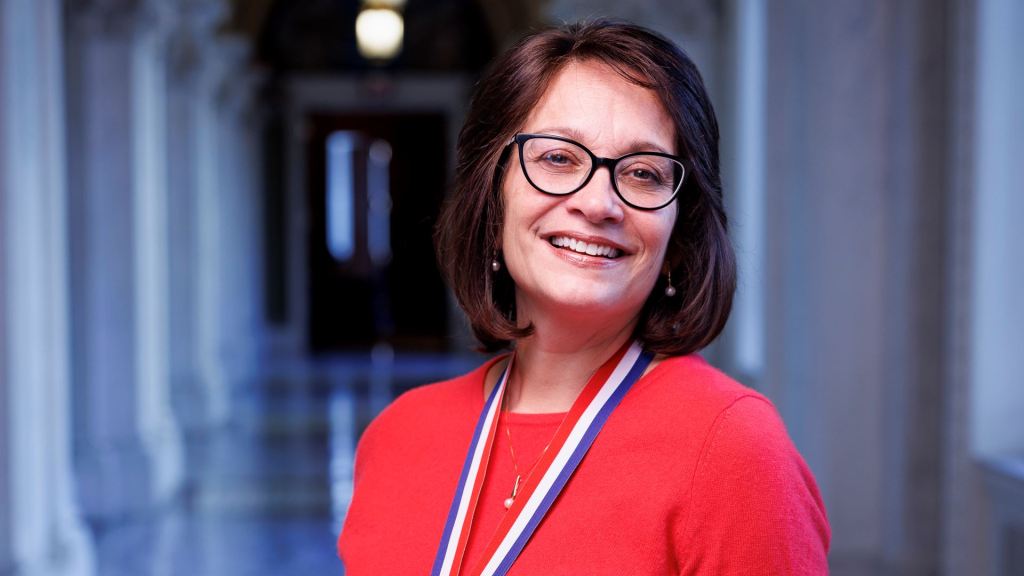
In association with Hear Our Voices, I given the opportunity to interview Medina for her upcoming children’s book No More Señora Mimí.
Meg Medina is an award-winning bestselling author of everything from children’s picture books to YA fiction. She is a National Ambassador for Young People’s Literature and works with the community supporting girls, Latino youth, and literacy.
The Interview
Let’s start with the basics, what inspired you to tell the story of No More Señora Mimí?
The inspiration came from my true-life episode of firing my childhood babysitter when I was five. From there, the story grew into a celebration of caretakers and the relationships kids form with the many people who help raise them.
No More Señora Mimí tells a heartwarming story of a difficult transition many children endure, and is full of the big emotions that come along with change. What did you find the most challenging about telling this story? And the most rewarding?
The most challenging part was finding my way into the story. For a while, I thought I was going to start with her writing Mimí a dismissal letter, sort of like a CEO saying “Sorry, but you’re out.” Obviously, I took a different approach.
The most rewarding thing was finding that sweet spot of telling a story that is layered with deep feelings and still having it feel relatable to the reader.
You have an amazing and extensive bibliography that not only includes picture books, but YA and Middle Grade as well. Is there an age group that you find easier to write for? One that has more challenges?
I love writing for all ages, so it’s hard to say which is harder or easier. Mostly, it just depends on my mood, the character’s age, and the main problem they’re facing. Once I have those things down, I find a joy getting to know them and complicating their lives as much as possible!
Children’s books are, well, intended for children. But it is most often adults who are reading to the young ones. What do you hope adults take away from this story?
First, I hope adults have a moment to reflect on the people who may have loved them in life. There’s a value to remembering and having moment of gratitude for the many ways we are helped along the way.
I also hope that adults think about Señora Mimí’s approach to Ana. She makes space for children’s emotional life as she interacts with them. She makes herself a safe harbor for all of Ana’s feelings, from jubilation to feelings of being overwhelmed. She helps Ana name her experiences and helps her think of solutions without being overbearing. She gives Ana agency over her problem of choosing between Abuela and Señora Mimí. There’s a respect that I hope comes through.
For every illustrated children’s book the process of illustration is different. What was the process like for No More Señora Mimí?
Brittany was working very fast on this project because there was interest in having it publish during my time as Youth Literature Ambassador. I received pencil sketches of the main characters first, followed shortly after by pencil sketches with my text laid out beside it. That was very helpful as we continued to edit the text. It gave me a chance to pare down places where it was too wordy and where the illustration could do the heavy lifting. And then, we kept refining, moving to a fall palette of color and setting all the details. The world became so rich, from the Cuban crackers to the matching sweaters. I should mention here that Brittany is a children’s librarian, so she had an amazing eye for creating illustrations that told the story.
Everyone has a Señora Mimí in their life, whether it be in the form of a grandparent, a babysitter, or a teacher. A caretaker they cared greatly for that they had to say goodbye to one way or another. For me, that was a teacher. If you are comfortable sharing, can you share with us who was your Señora Mimí?
My first babysitter was a woman named Mimí. She was an older Cuban lady, recently arrived to the US in the late 1960s. She had dyed red hair and freckles, and a gold tooth in the back that I remember. Her work made it possible for my mother to reshape her life after she left Cuba and after her marriage collapsed. My mother found herself a single mom in a foreign county, trying to raise two daughters. Mimí was a lifeline. She became a lifelong friend of the family, long after I “fired” her. I never lost her.
Lastly, many children are experiencing this transition right now as we enter back to school season. Are there any words of wisdom that you think Ana or Sra. Mimí would like to share with those children?
Many people will love you in life and help you become your best self. Remember to thank them for all the little ways they care for you.

 Geekyst
Leave a comment